Category: Legends

  • 2024 Historic Legend – Ray Martinez

    2024 Historic Legend – Ray Martinez

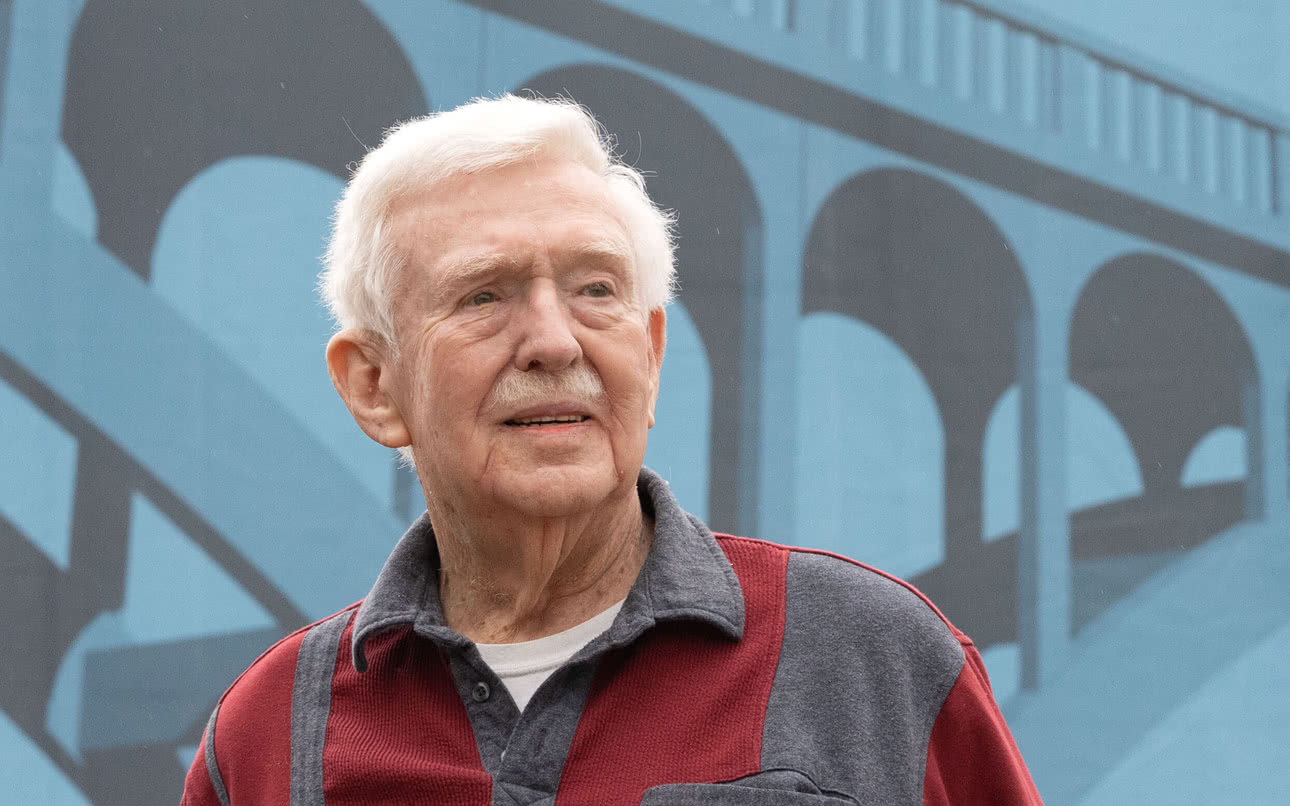
    Ray Martinez (1918-2002) —Born in Tempe, Arizona, in 1918 and passed away on December 5, 2002, at the age of eighty-five. He served in the U.S. Navy during WWII, trained as a radio man and served on the USS Macaser Straits until 1944 when he was injured in an enemy attack and sent to a hospital in San Diego until he recovered. Ray’s tour of service included duties for supporting American forces for the Pacific Island invasions, including Iwo Jima.

    After service, Ray returned home with a strong sense of duty and unity to address the long-standing and persistent practices of racism and discrimination the Tempe and Phoenix communities of Mexican American veterans and their families experienced.

    The formation of the American Legion Tony F. Soza-Ray Martinez Thunderbird Post 41 in 1945 provides an example of how veterans organized for equality. Their first challenge came in the early Spring of 1946: Tempe’s veterans approached Ray Martinez and asked for Post 41’s assistance in the elimination of the 1923 “No Mexicans Allowed” policy at Tempe’s public Olympic-sized swimming pool and recreation center, known as Tempe Beach. It was built on land donated to Tempe by Charles Trumbull Hayden. This 23-year-old policy was approved and sanctioned by the City of Tempe and enforced by the Tempe Chamber of Commerce. The veterans arranged to begin a series of discussions with members of the Tempe Chamber of Commerce and the City of Tempe, and they met often. Veterans spoke of their honorable military service and American patriotism during wartime. They explained why the segregation of Americans like them at Tempe Beach was un-American. Veterans deserved better, they said.  They argued that they proved their American loyalties and bravery. Segregation was wrong, they reasoned. Convincing arguments, indeed.   Finally, on May 21, 1946, the Tempe Chamber of Commerce and the City of Tempe agreed to end their “No Mexicans Allowed” policy at Tempe Beach.

    Ray Martinez served as Post 41’s Commander from 1945 to 1948. In 1950, he became the first Mexican American Vice Commander, American Legion, Department of Arizona. The following year, he was elected as Commander, the first Mexican American nationally to serve in the State Commander status. Ray Martinez is the first Mexican American to hold a State Supervisory Office as Commander of Civil Defense. He became the National Chairman for the American Legion’s Department for Children and Families. In addition, Martinez served as Children and Youth Commission Chairman for 27 years and was elected as Chairman of the Legion’s Western States Commission. Commander Martinez was instrumental in establishing the Arizona State Veterans’ Home.  Ray Martinez was inducted into the Arizona Veterans Hall of Fame in 2001, the first year of its establishment.

  • 2024 Living Legend – Hans Olson

    2024 Living Legend – Hans Olson

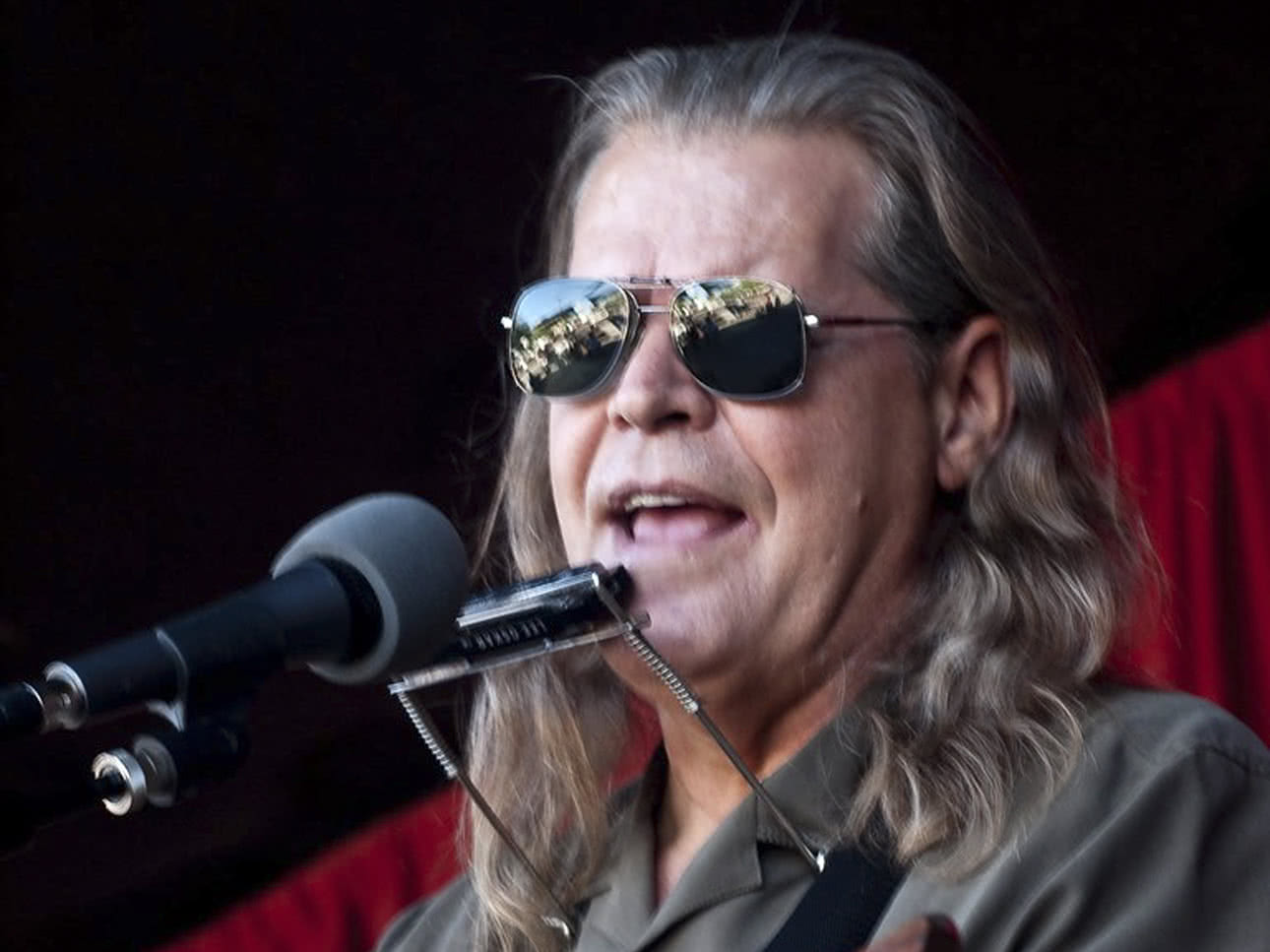
    If there ever were someone to epitomize the phrase, “your favorite musician’s favorite musician,” Hans Olson would be that someone. Despite a lack of mainstream success, the man is one of the premier musicians of Tempe and Arizona. Olson represents a musical style that, while not necessarily Arizona in origin, represents the state and its personality almost perfectly. His blend of blues, rock, folk, and country styles embodies the unique styles endemic to Arizona and its people. His music contains a grit and occasional dark edge, calling back to the state’s glorified old west roots. That is no accident. As Hans described in various interviews, being a musician in Tempe is no easy task.

    In an interview conducted by the Tempe History Museum, Hans told how many venues in Tempe do not even have staff to help the artist set up the sound equipment. Thankfully, this was a skill that Hans himself picked up. He cites his prowess with the setup as an essential factor in allowing him to make a living as an artist in a tough town. Hardship was something that Hans learned to deal with at a young age.

    At the age of five, Hans unfortunately lost his eye in an accident involving a stray arrow. That young age likewise saw the loss of his father. No doubt it was a trying time for anyone, but at this crucial juncture in his early life, Hans discovered his passion: entertainment. The young boy was enamored with the image of Gene Kelly dancing, and further inspired a few years later by the singing of legendary country artist Johnny Cash, Olson decided to play music and perform for a living. The young man did not have to wait long. A few years after his fateful encounter with the Man in Black’s music, Hans became the singer in a band native to his hometown of San Bernadino, California. Amusingly, Hans got the gig after his sister suffered from such severe stage fright that her audition could not be completed, and the band liked his voice. At fifteen, Hans began to sing and perform in various bars and clubs around the area; thankfully, he looked old enough, even in his adolescence, that no one bothered to check his age. Shortly after that, he also learned how to play the harmonica alongside the guitar, which would become the style of music and play the most esteemed, often dubbed the “harp-in-a-rack.”  Hans Olson is frequently cited as the best player of the style.

    However, as is commonplace, Hans moved. During his senior year of high school, Hans moved from the LA area to a place he initially viewed as boring- Tempe. Despite his reservations about the smaller town, which he thought would be boring and stuffy compared to the fast-paced and ever-changing California, Hans quickly found the opposite true. Hans talks of the exciting and fun-filled place that was Tempe in the early 1970s. Despite not having a reputation for it, Hans discovered that Arizona possessed a vibrant and exciting music scene, the legacy of which he would devote his current life to preserving. Hans helped to put on concerts in the early 70s at Papago Park and invited many bands. In the 70s, Hans began to achieve mainstream success, even playing to a crowd of over 20,000 people. He has played and performed with several high-profile bands and artists, including the Allman Brothers Band, ZZ Top, and John Fogerty.

    Most notable for Olson is that he played with one of the most renowned and admired blues musicians of all time, Muddy Waters. Waters inspired Olson and just about every other blues player, but aside from the thrill of playing with one of the legends, there was no doubt that the compliment that Olson received from Muddy Waters made the experience unforgettable. Waters complimented Olson on his uniqueness as a performer and as an artist. Many play the songs of Waters precisely as he played them, but Waters himself was impressed at how Hans Olson took the famed works of Muddy Waters, made them his own, and played the famous songs in the style that was uniquely Hans Olson. Perhaps no more excellent thing can be said of a musician than that. Olson has also found mainstream success.

    Many commercials and television programs have utilized songs written by him, and many likely have found themselves listening to one of his pieces unaware. Han’s uniqueness as a musician has firmly allowed him to root himself in underground and mainstream circles. On the same night, one could walk into a bar and hear him play while at the same time, a family could be humming a jingle he crafted on TV. Many artists cannot distinguish between artistic and creative freedom, commercial success, and financial stability. Hans Olson might thread that needle better than any other before him or since. This trait demonstrates the toughness and ingenuity that Olson frequently cites as a requirement for any musician looking to make it to Arizona, as it is a state that demands much of the artists who make this state home.

    Hans Olson’s acclaim comes from his musical talent, but the man is multifaceted. Olson’s importance to the state of Arizona delves into the realm of politics, as he helped to found the Green Party of the state of Arizona. He credits much of his success in that endeavor to the simple fact that he started something. Hans Olson is also a starter of other organizations, one of the most famous being a leading force behind the Arizona Blues Hall of Fame, The Arizona Music Heritage Foundation, and the Arizona Music and Entertainment Hall of Fame. All of which showcase one of the most admirable traits of the man. His desire to see the past preserved, honored, and shared for posterity.

    Arizona is no longer a place that the average man thinks of when discussing musical scenes. Hans partly attributes this to Arizona’s unique music scene, which is less supportive of the artists hailing from it than other areas. Despite that, Olson still contends that Arizona and the Valley have a unique musical scene and history that should be known, especially among Arizonans unaware of their state’s contributions to music. Despite occasional rough goings during the setup of these organizations, what cannot be understated is the dedication Olson showed in helping people understand that Arizona is a state with a vibrant musical history that should be respected, preserved, and celebrated.

    Hans Olson has lived a varied life, but a few things have been constant. He is a musician through and through. Never deviating too far from his original dream of entertaining and playing the music that he loved. Hans also acted, not content to opine on what should happen; he often took steps to make sure it happened or, at the very least, got the ball rolling. Whether this meant helping to found a political party, starting historic preservation organizations, or halls of fame meant to honor great musicians from the past and preserve their legacy, Hans Olson helped create things. Finally, Hans Olson has lived out the toughness and resilience that he has stated is a must for artists in the Grand Canyon State. Hans Olson has lived a life that epitomizes Tempe. It has been unique, varied, and in many cases complex, yet characterized by a toughness that has been the throughline of it all. Despite slowing down, he shows no signs of stopping anytime soon, and if one thing is clear based on his past, he will continue to play a part in things around Tempe for years to come.

  • 2024 Living Legend – Dr. Ben Furlong

    2024 Living Legend – Dr. Ben Furlong

    Dr. Ben Furlong was born in 1931 and raised in South Georgia until 1948 when he moved to Tempe with his family. He graduated from Tempe Union High School in 1949. In 1952, Ben graduated from Arizona State College at Tempe with a degree in Elementary Education. He taught for nine years at Sunnyslope School and at Franklin and Lincoln schools in Mesa. In 1961, he became the founding principal of Whittier Elementary School in northwest Mesa. Two years later, he was appointed Director of Elementary Schools for the Mesa Public Schools.

    In the meantime, Ben earned a master’s degree in Elementary Education and in 1967 was awarded a Doctor of Education Degree in Administration and Supervision. He was instrumental in the founding of the Mesa Historical and Archaeological Society, Inc. Ben has enjoyed a long-held interest in local history. He authored “The History of Kyrene.” He interviewed many of the pioneers of Kyrene and collected their stories.

    Shortly after receiving his Doctorate, Ben was appointed Superintendent of the Casa Grande Elementary Schools, a position he held for four years. Ben then served as Superintendent of the Kyrene School District from 1972 until retiring in 1987. The Kyrene School District grew more than eleven-fold during his tenure.

    Ben has pursued many of his personal and professional interests during his retirement—cabinet building, teaching graduate classes for Northern Arizona University, and pursuing political issues, both state and national. Ben and his family have lived in South Tempe for 25 years.

  • 2024 Historic Legend – Ladimir Kwiatkowski (Ladmo)

    2024 Historic Legend – Ladimir Kwiatkowski (Ladmo)

    Ladimir Kwiatkowski –( July 13, 1928-March 2, 1994). Yes, you know him: the thin, tall, clumsy kid with a top hat, rubber-faced expressions, and who wore long funny ties that came down to his knees. His best friends were Wallace and Gerald; he’s better known as Ladmo, the Arizona television personality and Emmy award-winning comedian who co-hosted “The Wallace and Ladmo Show”, a daily children’s variety show broadcast on KPHO: Channel 5, in Phoenix from April 1, 1954 to December 29, 1989–a period of 35 years!

    The program featured clowns, cartoons, dumb jokes and short comedy skits. The guests who appeared on the show were local and state politicians, popular entertainers, city council town representatives, police officers, the movers and the shakers of Maricopa County—all ready to deliver public service announcements or banter with Wallace and Ladmo, only to have a pie thrown in their faces or read the wrong cue cards—no one kept a straight face on camera when Ladmo, Gerald or Wallace ad-libbed funny stories or told dumb jokes. And Ladmo and Wallace gave away a prized brown paper sack to kids and called it “the Ladmo Bag: filled with candy, cans of soda pop, potato chips and prizes. –Today’s generations of fans confess: “I never got a Ladmo Bag when I was a kid.”—a metaphor for “I had a deprived childhood!” 

    As a young boy in his Cleveland neighborhood, Ladimir was known by his hometown boy-pals as “Laddie”, or “Lad” or “Slats”, because he was skinny. He loved baseball and wanted to be a major league player when he grew up. He often wore his public school’s baseball uniform to Sunday Mass, to waste no time to run out of the church when Mass ended to join his buddies at the baseball field ready to pitch or catch or hit baseballs with the best of them. Lad was a stand-out and gifted baseball player while attending Adams High School, a Class of 1947 graduate.

    He left Ohio to attend Arizona State College in Tempe as a Freshman in 1949 and wanted to be a sports broadcaster. Lad played on the ASC varsity baseball team from 1950 to 1954. In 1951, he led ASC in hitting, with a .358 average, including a single, two doubles, and a triple, in a game against the University of Arizona Wildcats. In 1952, Lad became Captain of the baseball team. It was said that he brought some respect to the ASC baseball program after being neglected by college sports personnel who paid more attention to other sports programs that brought in money. While at ASC, Lad majored in Journalism and wrote the sports column for the college newspaper, “State Press “—known as “Kwiat’s Kwikies”—a word play on his surname, Kwiatkowski.  Lad caught the attention of Ohio’s baseball scouts, who offered him an opportunity to play baseball for the Cleveland Indians farm team, playing in the minor leagues and maybe move on up to play professional ball one day. The thought appealed to him, but the “wait-to-play-ball-one-day” rhetoric didn’t. What appealed to Lad more was this new thing going on in the Salt River Valley and in Arizona homes. It was called “television.”– KPHO-TV, Channel 5.—the perfect place where his journalism skills of writing, reporting and telling new stories would be more important.

    The morning after Lad graduated from ASC, he went to the KPHO-TV office at 9:00 am, and at 11:00 am, he received a call: when can you begin? The next day, Lad began a new job at KPHO-TV, doing whatever he was assigned to do: sweep the floors; fold office chairs; run the tv cameras during live broadcasts, and eventually produce and direct television shows. Among the more popular kids’ shows in 1956 at KPHO-TV-5 was called “It’s Wallace”, with Bill Thompson being the funny guy, “Wallace”, with the jokes and routines. Lad became fascinated with the program because of its wide appeal to children, young boys and girls. It made him laugh a lot too. Bill Thompson noticed Lad. One day, Bill convinced Lad to appear with “Wallace” and perform a funny skit: it worked! The character forever known as “Ladmo” was born. Joining them in 1959 was the hilarious character known as the spoiled rich kid, “Gerald”, portrayed by the gifted comedian, Pat McMahon.  They were the complete opposites, which made for some great character sketches and skits: Ladmo loved sports. Gerald didn’t. Ladmo made “C’s” in school. Gerald made “A’s”. Ladmo loved the kids. Gerald thought they were “public school brats”. Ladmo liked rock-n-roll. Gerald loved classical music. Gerald’s goal was to make Ladmo’s life miserable. And it was “Wallace and Ladmo” and Gerald– making comedy history on KPHO-TV-5 for 35 years: appearing as buffoons, funny guys, pranksters, clowns, jokesters, at public parks, popular theatres, at Legend City, schools, football stadiums, —all making children laugh. On December 29, 1989, the last “Wallace and Ladmo Show” was aired on Chanel 5, KPHO-TV. The longest-running kids’ television show in broadcast history that featured the same characters/actors: Wallace: Bill Thompson.  Ladmo: Ladimir Kwiatkowski. And Gerald: Pat McMahon. Ladmo’s interest in baseball kept him busy after his retirement. When he learned that there was no baseball program for children in Tempe, he initiated in the summer of 1955 a “pee-wee league” for children aged 5 and 6 years of age; and a “rookie league” for children aged 7 and 9 years of age. The Summer games were played at Tempe High School on Monday to Friday, from 8 am to 10 am.  By 1961, Ladmo began coaching night leagues for children aged 10 to 18 years of age. The Tempe Junior Chamber of Commerce named Ladmo “Man of the Year”. In 1963, the Arizona Junior Chamber of Commerce added his name to their “Outstanding Young Men” award. —-Ladmo: a friend to the child in each of us.   Ladmo: a Tempe Legend.     

  • 2023 Legends – John Aguilar and Henrietta Soza Aguilar

    Living Legend: John Aguilar, Humanitarian; City of Tempe and Historic Legend: Henrietta Soza Aguilar (1934-2021)

    “All I wanted to do was help the poor, the ethnic and racial minorities, the disadvantaged in my town of Tempe. Mexican Americans like me: we knew the struggle, too. I wanted them to be better.”—John Aguilar.

    John has never been afraid of hard work. He learned the value of education as a young boy. He is a lifelong learner and student of self-improvement, self-reliance, and pride in his achievements. Since the 1960s John has been actively involved in improving the lives of Tempe residents through his work and volunteer service. Through the Tempe Girl’s Club, he helped establish social services and educational programs to help girls achieve their goals. In the 70s he worked on a number of initiatives with Tempe City Manager Ken McDonald to improve the educational, economic, and social programs that spurred Tempe’s growth and progress. This included a month-long stay in Germany to study model social service programs and bring back that knowledge to improve the programs in the City of Tempe. In the 1980s John, as the Human Resources Coordinator for the Fair Housing Program in Tempe, helped racial and ethnic minority residents to find affordable homes and end discriminatory practices and policies against them.

    Family is also very important to John and both the Soza and Aguilar families are part of Tempe’s history. His spouse, Henrietta Soza Aguilar (1934-2021), was the daughter of Henry and Victoria Soza. Her grandfather, Juan Soza, was born in Tuscon in 1851 and came to Tempe with his brother in 1871.  The Aguilar family fled Mexico during the Revolution of 1910 and settled in Tempe. John’s father, Juan Aguilar, worked for thirty-seven years for Tempe School District, and Aguilar Elementary is named for him and his wife Concepción.